Learning to fly in Mesa: the field that was built to do this
Falcon Field was built in 1941 to train Royal Air Force cadets, because the sky over England was busy with other things at the time. It has essentially never stopped being a training field since. That is not a decorative fact: eighty-odd years of continuous training operations is why the professional end of Arizona flight training clusters at this airport and not at any of the other four in the valley.
What kind of school is here?
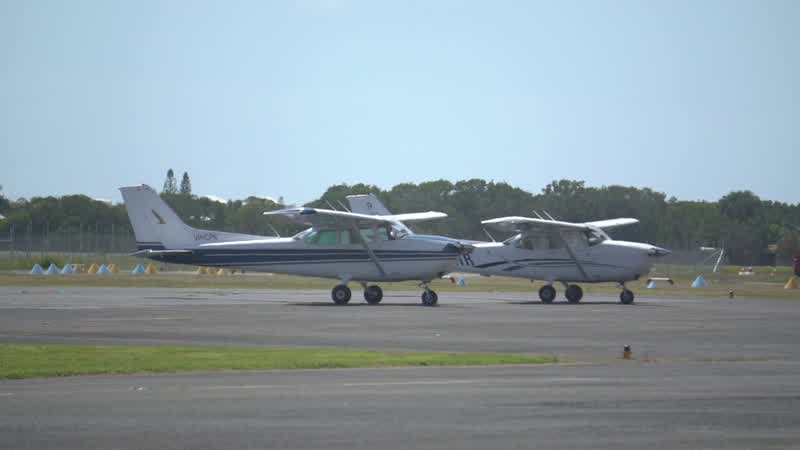
Career academies, mostly. ATP flies its accelerated, airline-focused national syllabus from Falcon Field. CAE — one of the largest airline-pilot pipeline operators in the world — runs its Phoenix aviation academy here, with cadet programmes and airline placement rather than casual weekend lessons.
And then there is Aviation Performance Solutions, which is a different animal entirely: upset prevention and recovery training for professional and corporate crews. Five stars across a hundred and twenty-six Google reviews in July 2026, which is the strongest public record of any flight operation we checked anywhere in Arizona. It also does not teach beginners to fly, and it would tell you so itself before we did.
One school is leaving rather than arriving. Classic Air Aviation is moving out to Chandler Municipal, so if an old listing sends you to a Falcon Drive address, that is why.
Is that concentration good for you or not?
It depends entirely on what you want, and the answer flips completely between the two cases.
If you are going for an airline seat and you want structure, a syllabus, a defined finish date and a cohort around you, Falcon Field is where those programmes live and the density is a genuine advantage. The instructors here spend their days training people who will do this for a living, and the standard follows them into every lesson, including yours.
If you want to fly on Saturday mornings for the joy of it, Mesa can absolutely do that — but the loudest operators on this field are not built around you, and a small school at Glendale or Chandler will probably suit you better and cost you less. Nobody standing in an academy lobby is going to say that to you.
What is upset recovery, and do you need it?
Almost certainly not, and it is worth knowing what it is anyway — because the best-reviewed operation we checked in Arizona is on this field, and a beginner who books it has misread the page.
Upset prevention and recovery training puts already-qualified pilots into the attitudes an aeroplane is not supposed to be in — steep, inverted, stalled, thoroughly out of shape — and teaches them to get it back. Airlines and corporate flight departments buy it for crews who will very probably never need it, because losing control of an aeroplane is the emergency that leaves you the least time to improvise. It is a graduate course, and Aviation Performance Solutions will tell you so before we do.
If the instinct behind wanting it is a good one, and it is, the version of that instinct available to somebody who has not flown yet is the tailwheel and aerobatic instruction at Chandler. Same underlying habits, taught at the stage where they still shape how you fly everything afterwards.
What does the career path actually cost?
In stages: thirteen to twenty thousand dollars for the private certificate, another ten to fifteen for the instrument rating layered on top, and ten to twenty thousand and up for the commercial — which needs 250 flight hours under Part 61, or 190 under an approved Part 141 course.
Counted from zero hours, the full professional track runs eighty to a hundred and twenty thousand dollars and up. That is a mortgage-shaped decision, and it is exactly why a real lending ecosystem has grown around flight training: Sallie Mae, Stratus Financial and AOPA all offer products built specifically for it. If you are holding an academy brochure and doing arithmetic in your head, that is the number the arithmetic lands on. It is not the number for a private certificate, and nobody pays it on day one.
Part 141 status matters more at this airport than anywhere else in the valley. GI Bill and M-1 student-visa funding both require it, and that sixty-hour difference in the commercial minimum is tens of thousands of dollars at commercial training rates. Several schools here hold it and not all of them publish it, so ask directly rather than inferring it from the size of the building.
How do you start if the career is the goal?
With a discovery flight, at about a hundred to two hundred fifty dollars, same as everybody else. A hundred-thousand-dollar decision should be made after you have had the controls in your hands, not before.
Then ask an academy here for a cohort start date and a written total, and ask a small school what the same certificate costs part time. Those two answers describe genuinely different products, and seeing them side by side is most of the decision. We have no stake in which you pick — we take nothing from you and we do not mark up anyone’s prices. Tell us where you want to end up and how fast, and we will get both answers out of Falcon Field for you and book the flight. Free, at the school’s own price.